

The Health Equity Evidence Centre brings together and synthesises research to help address health inequalities. A key part of our work is maintaining Living Evidence Maps, which organise a large and growing body of research. We use artificial intelligence (AI), specifically machine learning, to help us do this efficiently, and we are open about how and where we use it.
We are also actively researching how AI can support different stages of evidence synthesis and sharing what we learn with the wider research community. Our work explores both the opportunities and limitations of these tools.
How do we use AI?
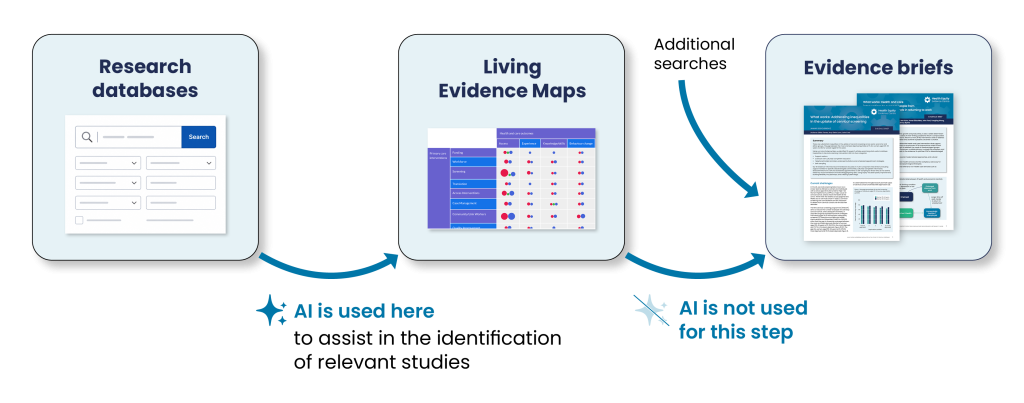
We use AI tools to help us find relevant literature for our Living Evidence Maps. Specifically, we use machine-learning tools within EPPI-Reviewer to make the process of identifying relevant studies quicker and more manageable.
As we screen papers and decide which are relevant, the software learns from those decisions. It then prioritises other papers that might be relevant, helping us find useful evidence more quickly and keep on top of a large and growing body of research.
Relevant studies are then added to our Living Evidence Maps. These maps help people find literature on a particular topic and identify gaps in the evidence.
We have experimented with using generative AI to bring together findings from multiple studies, but so far, we have found the results less reliable and lower in quality than synthesis carried out by our researchers.
Members of our team also use AI in different ways, for example to scope an unfamiliar topic, improve readability, or help solve technical problems.
Do we use AI to produce evidence-based content?
No. Our evidence-based outputs, including our Evidence Briefs, are researched and written by our team. We use studies from our Living Evidence Maps, together with additional searches, to inform the briefs. We do not use generative AI tools such as ChatGPT to write this content.
What have we learned about AI in evidence synthesis?
Our experience of using machine learning through EPPI-Reviewer led us to look more closely at the wider role AI could play in evidence synthesis.
With funding from the Health Foundation, we explored the growing range of AI tools that can support different stages of evidence synthesis, from searching for evidence and screening citations to extracting and assessing data and writing reviews. We produced case studies of eight tools, looking at what they can do, their strengths and their limitations.
Drawing on these case studies, we also produced a practical guide to help researchers use AI tools in evidence synthesis while maintaining rigour and quality.
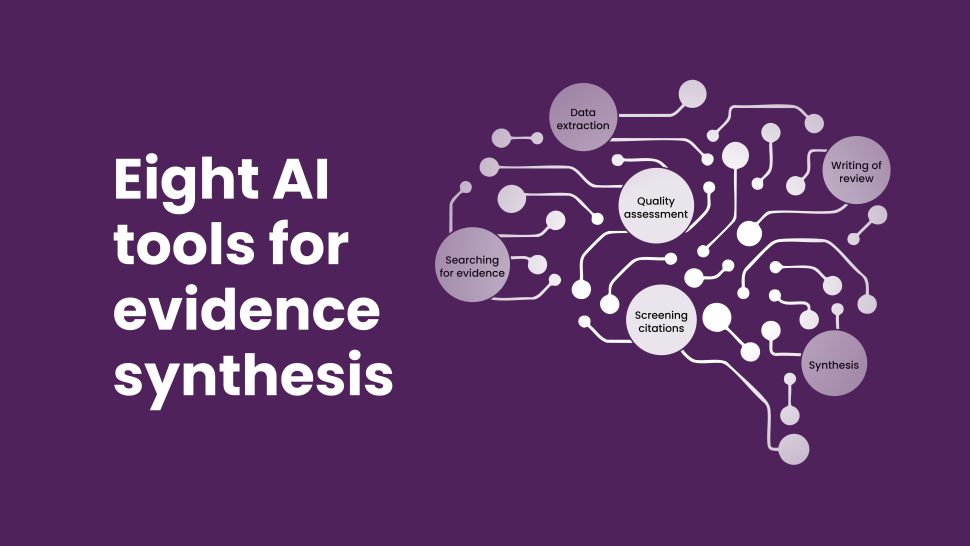
Eight AI tools for evidence synthesis: Case studies and comparisons
This tool presents an independent assessment of eight AI tools designed to support evidence synthesis. Each case study summarises the tool’s capabilities, research evidence, and HEEC’s practical experience to guide researchers in selecting the most appropriate solutions for their reviews.
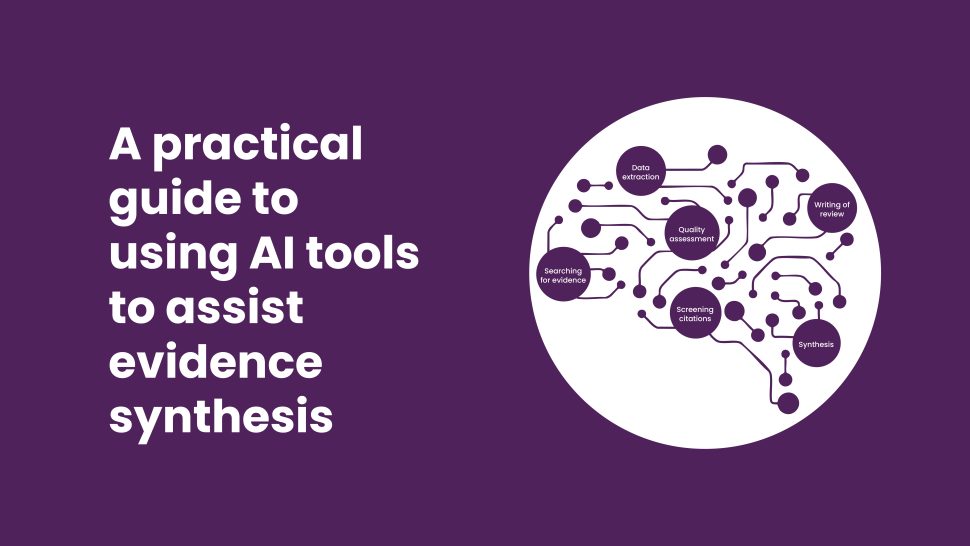
A practical guide to using AI tools to assist evidence synthesis
This practical guide supports researchers in using AI tools to assist with evidence synthesis while maintaining rigour and quality. Drawing on real-world case studies and research conducted by the Health Equity Evidence Centre, it provides practical advice on integrating AI responsibly across all stages of the synthesis process.