

As part of our current Work & Health project, we are creating Living Evidence Maps of the evidence on healthcare interventions that can help people remain in or return to work.
How we identified and screened evidence
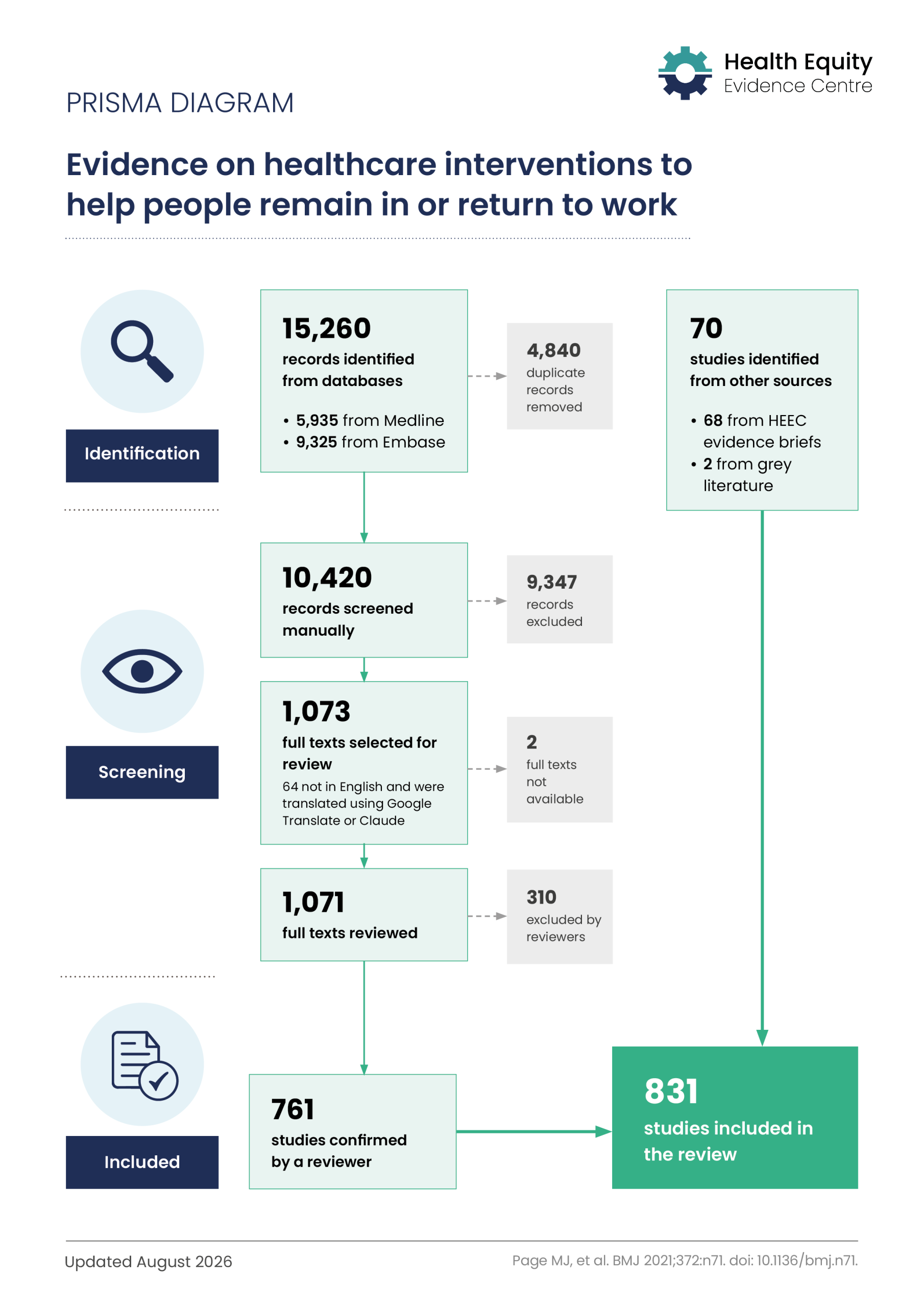
The majority of the studies in the living evidence maps came from traditional database searches. These returned approximately 10,000 studies, which were manually screened in EPPI-Reviewer by title and abstract, resulting in just over 1,000 studies.
One of EPPI-Reviewer’s recent features enables screening using large language models (LLMs). An LLM (GPT-5.2) was used to screen the full texts of these 1,071 studies for relevance and to code them according to the population, intervention, outcome, and methodological quality. This coding was then checked by a human reviewer. The result is an evidence map that shows where the evidence lies and where the gaps are.
This innovative approach has significantly accelerated the mapping of the evidence base compared with traditional methods.
Click on the image to view the full-size PRISMA diagram
View the maps
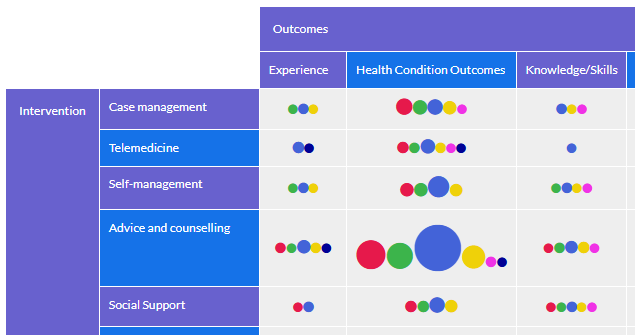
Interventions and work & health outcomes
Explore interventions addressing work and health outcomes.
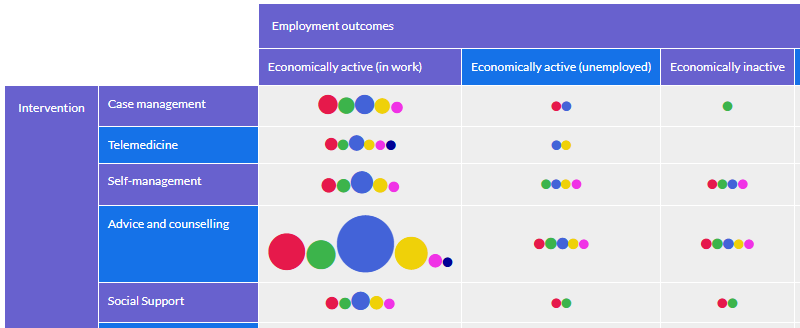
Interventions and work outcomes
Explore interventions addressing work outcomes.
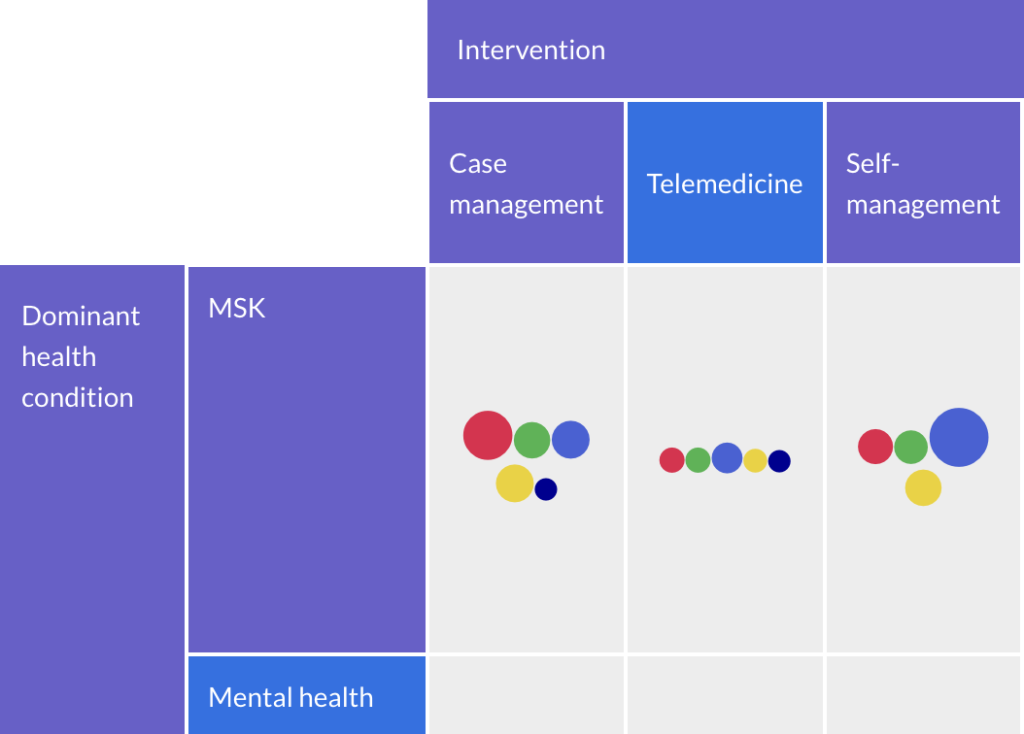
Interventions for populations with specific health conditions
Explore interventions for populations with specific health conditions.
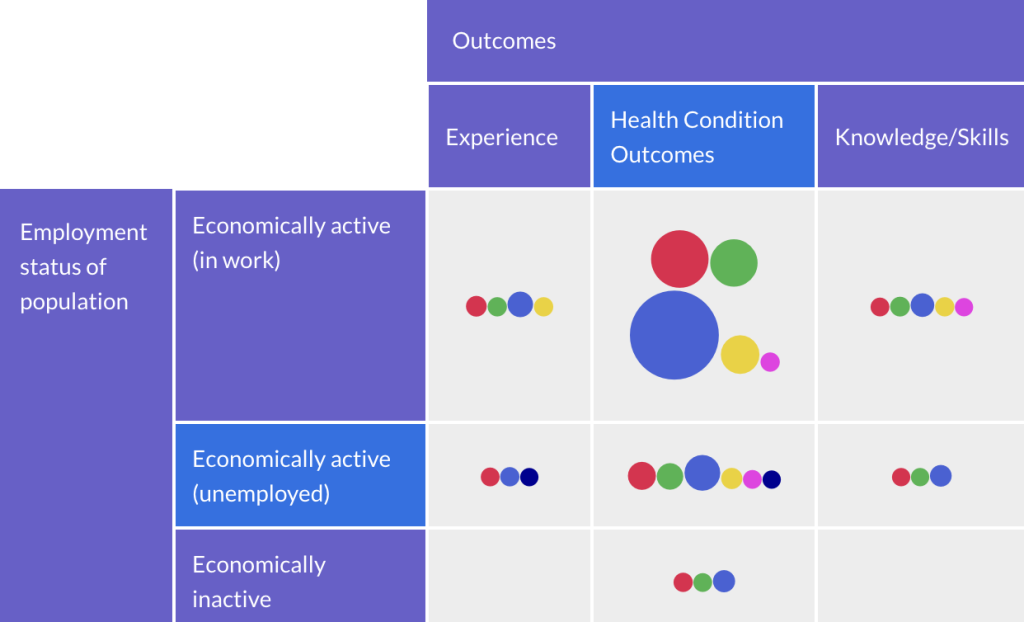
Outcomes by baseline employment status
Explore outcomes by baseline employment status.
How to use the maps
Declaration
This work was developed collaboratively with NHS England, with funding provided by NHS England. The Health Equity Evidence Centre retained full independence in the production of all academic outputs.