
What health and care interventions support people with chronic pain and/or MSK conditions to improve employment-related outcomes?

Chronic pain affects around one in four adults in England and is associated with lower employment. This evidence brief examines what helps people with chronic pain or musculoskeletal conditions stay in or return to work. Approaches combining physical, psychological and work-focused support show the most promise, although the evidence remains uncertain.
Chronic pain MSK conditions and employment[PDF 472kb]
Download documentSummary
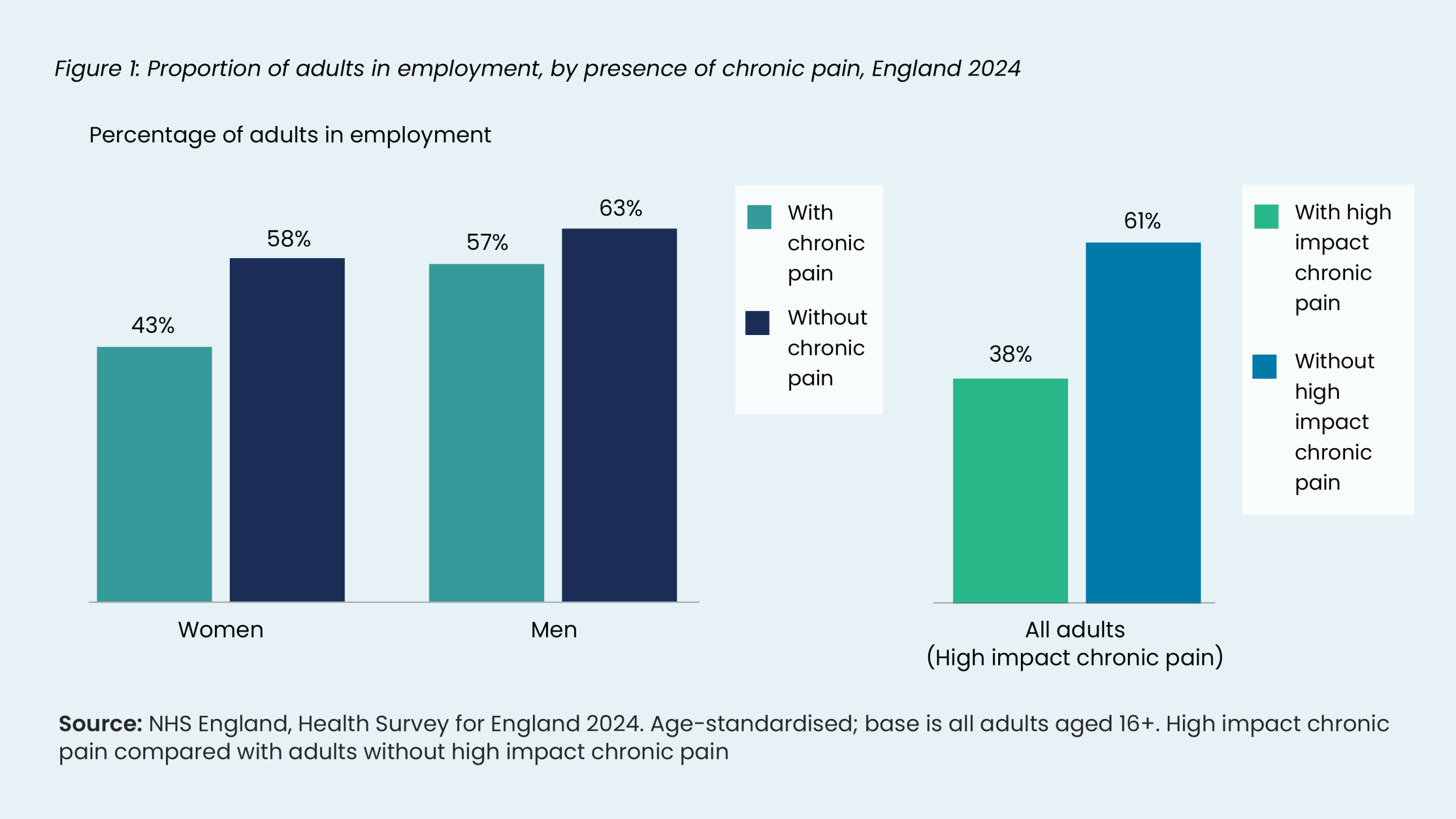
Chronic pain affects around a quarter of adults in England and is strongly associated with lower employment. Only 38% of people with high-impact chronic pain are in work, compared with 61% of those without it, and high-impact chronic pain is around three times more common in the most deprived areas than in the least deprived. With significant national focus on work and health, this evidence brief examines which health and care interventions can improve employment-related outcomes for people with chronic pain and musculoskeletal conditions.
Interventions that combine physical, psychological and work-focused support appear more promising than single treatments, although findings are mixed and the certainty of the evidence is low. Psychological therapy, physical activity and specialist treatment showed little effect on employment when delivered on their own. Where a single component did appear to help, it was either added to a multimodal programme, such as follow-up calls from a return-to-work coordinator after rehabilitation, or delivered in the workplace rather than the clinic, such as training with a job coach liaising with supervisors. We suggest the barriers to work are both personal and practical and are best tackled together. Opioid use is associated with poorer work outcomes.
The evidence also points to reducing sickness absence among people who are still employed, and is weakest for helping people who have already left work. The largest review supports this by finding that interventions reduced sick leave slightly but made no difference to return to work. Work-related outcomes are measured and defined inconsistently in the literature.
Based on the evidence, we recommend intensive biopsychosocial support from health care organisations and vocational rehabilitation in workplaces at the point at which a person is at risk of leaving employment. Personalised care and medicines optimisation which aims to reduce opioid dependence is also likely to help.
Current challenges
Chronic pain and musculoskeletal (MSK) conditions are among the leading drivers of sickness absence and economic inactivity in the UK [1]. In the Health Survey for England, chronic pain is defined as pain experienced on most days or every day over the past three months, and high impact chronic pain as chronic pain that interferes with daily life or work activities on most days or every day [2]. MSK conditions are the most common cause of chronic pain [3]. They can cause chronic pain either as secondary to an underlying condition, such as osteoarthritis, or as a primary chronic pain condition, such as fibromyalgia [4].
In 2024, 26% of adults in England reported chronic pain, and 13% reported high impact chronic pain [2]. After accounting for age, 43% of women with chronic pain were in employment compared with 58% of women without it. Among men, the figures were 57% and 63% [2]. The gap widens as pain becomes more limiting: 38% of adults with high impact chronic pain were in employment, compared with 61% of those without it (Figure 1). For those who remain in employment, chronic pain can also increase rates of presenteeism (resulting in reduced productivity/performance) and absenteeism (sickness absence) [5][6]. Collectively, this costs the UK economy several billion pounds each year [7][8][9].
Chronic pain is also patterned by deprivation. People in England’s poorest areas are about twice as likely to live with chronic pain (36% v 19%), and about three times as likely to have the kind of pain that stops them working or getting on with daily life (21% of men and 25% of women in the most deprived areas, compared with 7% and 9% respectively in the least deprived) [2] (Figure 2).
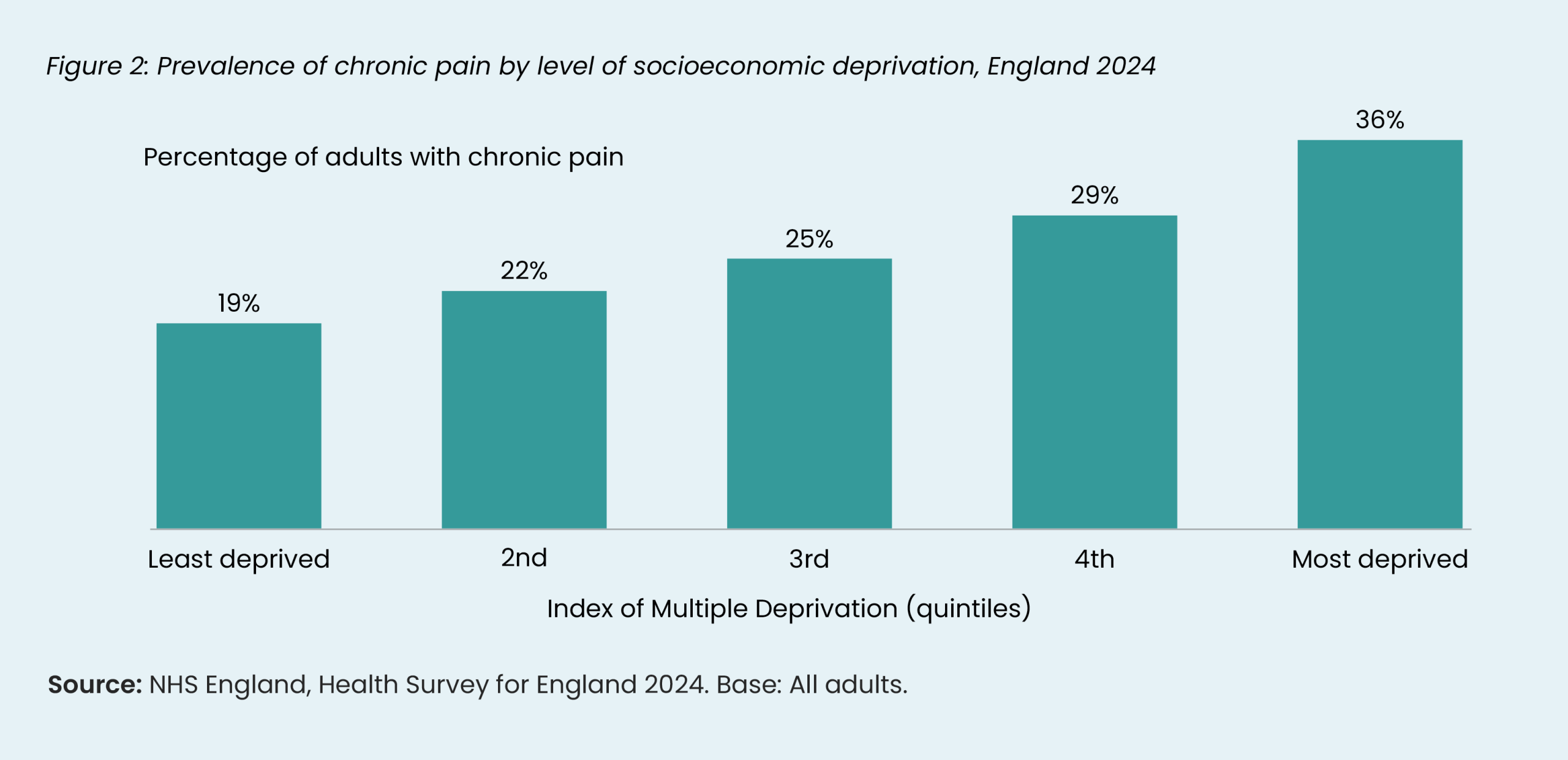
Not only is there a clear gradient between chronic pain prevalence and socio-economic deprivation, chronic pain in turn can limit people’s ability to work or engage in meaningful activity, deepening poverty and exclusion [9].
National policy landscape
There is significant national focus on work and health currently. The Get Britain Working White Paper sets out plans to join up health, employment and skills support [10]. With chronic pain such a key driver of health driven economic inactivity, it is logical that interventions to support this patient cohort are a priority for any such programme. NHS England’s Health and Growth Accelerator programme [11], which is running in South Yorkshire, North East and North Cumbria, and West Yorkshire, is dedicated to boosting people’s health alongside tackling the conditions that most impact people’s ability to work; this includes chronic pain and musculoskeletal conditions.
Here we review the evidence of effective health and care approaches to enable more people living with chronic pain to return to work and remain in work.
Summary of evidence
We prioritised 26 of the most relevant studies identified through screening via EPPI-Reviewer, supplemented by six studies identified through snowballing and targeted searches (four additional reviews and two trials) and five studies from our previous report on MSK problems, chronic pain and mental health conditions [12]. Interventions ranged from single treatments i.e. psychological therapy, exercise, spinal cord stimulation, to multimodal programmes (which combine physical, psychological and occupational components) lasting several weeks. Most interventions in this review were multimodal and recruited people already on long-term sick leave rather than at risk of leaving work. Most studies were conducted in Scandinavia, Western Europe, North America and Australia.
The intervention types identified in this evidence brief are summarized in the five categories below:
1. Multimodal interventions
2. Psychological interventions
3. Work-focused rehabilitation
4. Exercise and self-management
5. Specialist medical interventions
1. Multimodal interventions
Multimodal interventions have the strongest support of any approach, although the evidence overall is of low to moderate certainty. In a 10-year follow-up, multidisciplinary rehabilitation reduced sickness absence by around 43 days a year compared with treatment as usual, whereas physiotherapy or cognitive behavioural therapy (CBT) alone made no difference [13]. Systematic reviews reach similar conclusions – the interventions that improved return to work were mostly multidisciplinary, though the evidence was judged inconclusive [14][15], and after spinal surgery, personalised multicomponent rehabilitation outperformed single-component approaches [16]. Almost every uncontrolled study of multimodal interventions reported positive results; from modest falls in sick leave (40% to 32%) to large gains, with up to 78% of patients able to return to work [17]-[22]. It should be noted that these studies are of lower methodological quality due to lack of control groups. Longer term, multicomponent interventions seem to have a lasting effect; In a Swedish cohort study of 122 people with persistent musculoskeletal pain, following a multidisciplinary intervention found 52% working at six years against 13% in the control, though the comparison group was not randomised [23].
2. Psychological interventions
Psychological interventions may be an important component of a multimodal approach, but there is little evidence that they improve work outcomes on their own. One explanation is that therapy involving only the person in pain cannot remove obstacles in the workplace [24]. A more pragmatic reading is that the barriers to work are both personal and practical and are best tackled together. This may explain why multimodal approaches do better.
A recent review of 51 randomised controlled trials (RCTs) in people with chronic pain found that interventions with psychological components, almost always delivered alongside other treatments, slightly reduced sick leave but did not improve return to work or work ability [25]. A review of 18 RCTs of psychological therapies for chronic pain found no significant effect on work absence in the nine trials that measured it [24]. A review of 13 RCTs found no conclusive evidence for any single intervention; however, the five trials that improved return to work all had multidisciplinary elements, such as CBT combined with graded activity, or workplace rehabilitation with a job coach, while CBT on its own delayed return to work for some participants [14]. When it comes to acceptance and commitment therapy (ACT), the National Institute for Health and Care Excellence (NICE) recommends considering ACT (as well as CBT) for people managing chronic pain to improve quality of life, however when it comes to return to work, sick leave, or working hours at 12 months a Swedish study found that ACT alone was no better than usual care [26]. In contrast, in a Norwegian RCT of 213 people on long-term sick leave, all of whom completed a 3½-week ACT-based rehabilitation programme; those who also received six months of ACT booster sessions by telephone from their return-to-work coordinator were more likely to be working at least one day a week at one year [27].
3. Work-focused rehabilitation
Work-focused support appears to help most when it keeps people connected to their job and involves the workplace, rather than being delivered only in the clinic. A review of 14 studies of workplace-linked interventions for musculoskeletal pain found that vocational rehabilitation reduced job loss, and that involving employers “probably reduced…sick leave,” though the evidence was mostly low quality [15]. In a small RCT in Hong Kong of 103 workers with work-related shoulder disorders, training in the workplace with a job coach liaising with supervisors returned 72% to work or modified duties within weeks, compared with 38% for clinic-based training [28]. Continuity of care matters too. In a Norwegian RCT of 213 people on long-term sick leave, adding six months of telephone follow-up from a return-to-work coordinator after a rehabilitation programme increased the proportion working at least one day a week at one year (55% vs 45%) [27]. Staying in work matters – a large US cohort of 2,191 people with chronic work-related musculoskeletal disorders found that those who kept working after injury (‘presentees’) were more likely to return to full duties and still be working a year later than those who went off sick (‘absentees’) [29].
However, a recent review found the work element of the intervention is not very substantial. The review of 51 RCTs found that interventions with a work component were no more effective than those without, but only 39% included one, and this was often just ergonomic support [25]. A Swedish registry study of 3,809 patients in specialist pain rehabilitation suggests that work place interventions are commonly offered but rarely reache the workplace [30]. We found no definitive trial of Individual Placement and Support (IPS) in this population.
4. Exercise and self-management
Exercise and self-management may ease pain symptoms in the short term, but there is little evidence that they improve work outcomes. In a Swedish RCT of 60 women on long-term sick leave with chronic neck pain, one month of home-based strength or myofeedback training reduced pain compared with a control group; work ability improved within the strength training group, but not significantly more than in controls [31]. Return to work and sick leave were not measured, however elsewhere it is suggested that increased work ability is associated with better return to work outcomes [30]. Similarly, in a Danish RCT of 141 people recently sick-listed with back or upper-body pain, neither tailored physical activity nor a chronic pain self-management programme improved return to work, pain or work ability compared with a reference group at 11 months, and an early advantage for physical activity on return to work at three months was no longer there [32]. From this review, an intervention that improves symptoms has not directly shown to have led to improved employment outcomes.
5. Specialist medical interventions
Evidence for specialist clinical interventions comes largely from uncontrolled studies. A meta-analysis of seven studies of spinal cord stimulation (824 patients) found more patients in work after treatment than before (OR 2.15, 95% CI 1.44–3.21) [33]. The comparison is patients against themselves rather than against a control or alternative treatment. By contrast, in a controlled comparison, two Norwegian RCTs of 124 people with chronic low back pain and disc degeneration, most of them out of work at the start, found no difference in return to work four years after spinal fusion or a cognitive intervention with exercise [34].
Evidence on opioid medication and employment is thin. A scoping review of 65 studies, mostly US cohort studies of injured workers receiving benefits, found no medicine that improved work outcomes: early, long-term or high-dose opioid use was consistently associated with longer work disability, the few trials that measured work found no benefit, and evidence for other medicines was limited and inconsistent [35]. However, in a cohort of 127 injured workers, those who stayed on opioids returned to work as often as those who did not (72% vs 76% at around six months), although opioid use was not randomised and was self-reported [36]. There is some qualitative evidence from a more recent scoping review of substance use (including opioids – prescribed and non-prescribed) was beneficial as a coping mechanism for managing chronic pain, and therefore increasing self-reported work ability [37]. However, the overall finding was the substances diminished work performance and increased absenteeism. Therefore, overall specialist treatments may relieve pain, but none has been shown to improve employment on its own, furthermore, opioids are associated with negative work outcomes.
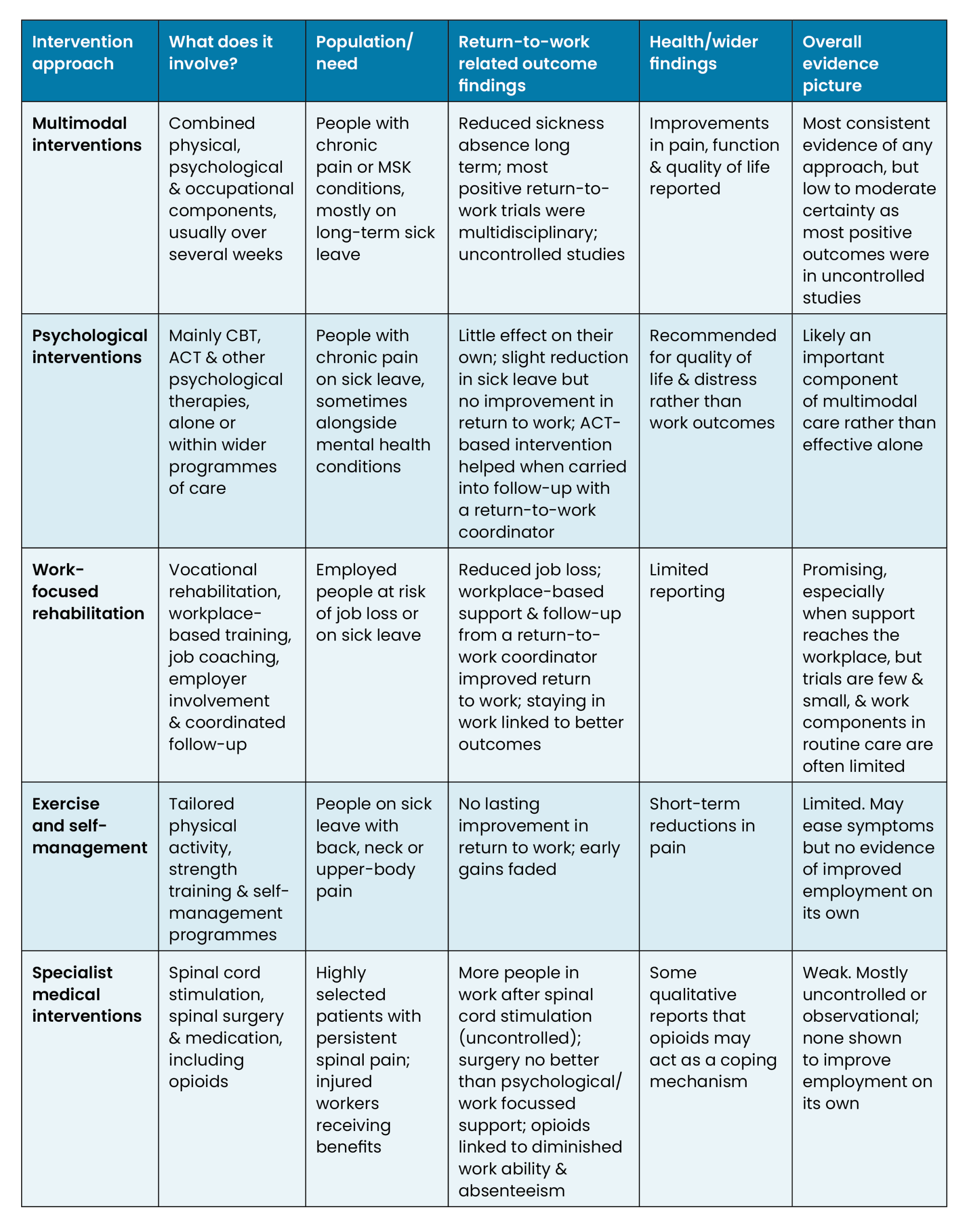
Summary of evidence table
Further considerations
Measuring work outcomes
Comparing studies is challenging, partly due to the heterogeneity of labour-market outcomes, which include return to work, sickness absence (absenteeism) and work-readiness, amongst others. This heterogeneity is described by a systematic review, which identified 91 measures of work participation across 51 trials, varying in how they were defined and collected [25].
It may be useful to consider all work-related outcomes as a continuum, describing how close someone is to the labour market – ‘proximity to work’. That would cover full employment through to economic inactivity due to long term sickness. Along that continuum we would include sickness absence, remaining in work, return to work, return to full duties or hours, work readiness and functioning, and even include wellbeing and health related quality of life measures.
Equity
We found that evidence is strongest for reducing sickness absence rather than getting people back into work after leaving the market. With the interventions weighted towards people who are still in work may negatively impact equity. A large cohort study showed a demographic difference between the presenteeism and absenteeism groups: presentees were more likely to be educated white women with jobs requiring low physical demand, who experience upper-extremity injuries. These presentees were also more likely to report lower levels of depressive symptoms, and to perceive their disability as less severe than absentees do [29]. Support for keeping people in work should therefore not come at the expense of those already on long-term sick leave or out of work.
Limitations
As a rapid evidence brief, we prioritised the most relevant studies through a screening process rather than conducting a full systematic review. The evidence itself was heterogeneous in populations, interventions, settings and outcomes, which makes direct comparison between approaches difficult. Work outcomes were defined and measured inconsistently, from sickness absence and return to work, to work ability and job retention. Much of the evidence came from uncontrolled or observational studies, and even the largest reviews rated the certainty of evidence as low or very low.
The evidence was also concentrated in particular populations and settings. Most studies recruited people who were still employed or on sick leave from a job, and at least one review excluded unemployed participants altogether, so there was very little evidence for people who had already left the labour market. None of the primary studies were conducted in the UK. Many came from Scandinavian welfare systems, and one from North American workers’ compensation schemes, which differ from UK sickness absence and benefit arrangements, so findings may not transfer directly to UK services. Finally, few studies examined whether outcomes differed by socioeconomic circumstances, ethnicity, gender or type of work. Given that chronic pain and its impact on work are socially patterned, this limits conclusions about whether the interventions reviewed reduce, maintain or widen inequalities in employment.
What works: key recommendations
Based on the evidence, we have the following recommendations. GRADE certainty reflects the strength of evidence behind each recommendation, not necessarily the likelihood of effectiveness or policy priority.
| Recommendation | Target audience | GRADE certainty |
|
Commission multimodal biopsychosocial interventions to support those living with chronic pain, with intensive support for those at risk of leaving employment. |
Integrated Care Boards, Department of Health and Social Care |
⊕ ⊕ ⊕ Moderate |
|
Develop a national programme for workplace-based rehabilitation for small and medium sized enterprises, taking an early intervention integrated with health. |
National Government |
⊕ ⊕ ⊕ Moderate |
|
Ensure medicines optimisation is part of the treatment for this patient cohort – with a specific focus on reducing avoidable long-term opioid dependence. |
Integrated Care Boards, primary care |
⊕ ⊕ Low |
|
Where interventions are delivered, provide personalised support with a named care coordinator, offering longer term follow up where able. |
Integrated Care Boards, Health and Care Organisations |
⊕ ⊕ Low |
|
Develop an outcomes framework for health and work research to harmonise approaches and reduce heterogeneity Report outcomes by socioeconomic circumstance and type of work. |
Research Funders and Commissioners of Service Evaluations |
Not applicable |
GRADE certainty communicates the strength of evidence for each recommendation. Recommendations which are supported by large trials will be graded highest whereas those arising from small studies or transferable evidence will be graded lower. The grading should not be interpreted as priority for policy implementation – i.e. some recommendations may have a low GRADE rating but likely to make a substantial population impact.
How this brief was produced
Using AI-powered software called EPPI-Reviewer, the Health Equity Evidence Centre has developed a Living Evidence Map of what works to address health inequalities in primary care. The software identifies research articles that examine interventions to address inequalities. The evidence map contains systematic reviews and umbrella reviews. More information can be found on the Health Equity Evidence Centre website.
This brief was developed collaboratively with NHS England, with funding provided by NHS England. The Health Equity Evidence Centre retained full independence in the production of all academic outputs.
Suggested citation
Khan I, Dudley D and Ford J. Evidence brief: What health and care interventions support people with chronic pain and/or MSK conditions to improve employment-related outcomes? Health Equity Evidence Centre; 2026
References
- ONS. Rising ill-health and economic inactivity because of long-term sickness, UK: 2019 to 2023. 2023.
- NHSE. Health Survey for England, 2024: Chronic pain. Accredited official statistics. Leeds: NHS England; 2026/01/27.
- Arthritis UK. Chronic pain in England: Unseen, unequal, unfair
Available from: https://www.arthritis-uk.org/policy-and-data/chronic-pain-in-england/. - Kang Y, Trewern L, Jackman J, McCartney D, Soni A. Chronic pain: definitions and diagnosis. BMJ. 2023;381:e076036.
- Kawai K, Kawai AT, Wollan P, Yawn BP. Adverse impacts of chronic pain on health-related quality of life, work productivity, depression and anxiety in a community-based study. Family practice. 2017;34(6):656-61.
- HSE. Working days lost in Great Britain London: Health and Safety Executive; 2024.
Available from: https://www.hse.gov.uk/statistics/dayslost.htm. - Bevan S. Economic impact of musculoskeletal disorders (MSDs) on work in Europe. Best Practice & Research Clinical Rheumatology. 2015;29(3):356-73.
- HSE. Costs to Great Britain of workplace injuries and new cases of work-related ill health London: Health and Safety Executive; 2026 [updated 2026/01/15
Available from: https://www.hse.gov.uk/statistics/cost.htm - Ellis B, Ly M, Steinberger S. Chronic pain in England: unseen, unequal, unfair. Chesterfield: Versus Arthritis; 2021 2021/06.
- Department for W, Pensions, Treasury HM, Department for E. Get Britain Working White Paper London: HM Government; 2024 [updated 2024/11/26]
Available from: https://www.gov.uk/government/publications/get-britain-working-white-paper/get-britain-working-white-paper - NHSE. World leading NHS trial to boost health and support people in work London: NHS England; 2024 [updated 2024/12.
Available from: https://www.england.nhs.uk/2024/12/world-leading-nhs-trial-to-boost-health-and-support-people-in-work/ - HEEC. Integrated primary and community support for people living with chronic pain, musculoskeletal problems and mental health conditions London: Health Equity Evidence Centre, Queen Mary University of London; 2026 [updated 2026/09]
Available from: https://www.heec.co.uk/wp-content/uploads/2026/09/Integrated-primary-and-community-support-for-people-living-with-chronic-pain-musculoskeletal-problems-and-mental-health-conditions.pdf - Busch H, Bodin L, Bergström G, Jensen IB. Patterns of sickness absence a decade after pain-related multidisciplinary rehabilitation. Pain. 2011;152(8):1727-33.
- Wegrzynek PA, Wainwright E, Ravalier JM. Return to work interventions for chronic pain: a systematic review. Occupational Medicine. 2020;70(4):268-77.
- Oakman J, Keegel T, Kinsman N, Briggs AM. Persistent musculoskeletal pain and productive employment; a systematic review of interventions. Occupational and Environmental Medicine. 2016;73(3):206-14.
- Callens J, Lavreysen O, Goudman L, De Smedt A, Putman K, Van de Velde D, et al. Does rehabilitation improve work participation in patients with chronic spinal pain after spinal surgery: a systematic review. Journal of Rehabilitation Medicine. 2025;57:jrm25156.
- Mailis A, Deshpande A, Lakha SF. Long term outcomes of chronic pain patients attending a publicly funded community-based interdisciplinary pain program in the Greater Toronto area: results of a practice-based audit. Journal of Patient-Reported Outcomes. 2022;6(1).
- Nakaso. Long-term effects of a chronic pain management program (‘PAIN CAMP’) on refractory chronic pain classified by ICD-11: a single-arm intervention study. Pain Practice. 2026.
- Ibrahim ME, Weber K, Courvoisier DS, Genevay S. Recovering the capability to work among patients with chronic low back pain after a four-week, multidisciplinary biopsychosocial rehabilitation program: 18-month follow-up study. BMC Musculoskeletal Disorders. 2019;20(1):439.
- Beaudreuil J. Efficacy of a functional restoration program for chronic low back pain: prospective 1-year study. Joint Bone Spine. 2010.
- Gantschnig BE, Heigl F, Widmer Leu C, Bütikofer L, Reichenbach S, Villiger PM. Effectiveness of the Bern Ambulatory Interprofessional Rehabilitation (BAI-Reha) programme for patients with chronic musculoskeletal pain: a cohort study. Swiss Medical Weekly. 2017;147:w14433.
- Pietilä-Holmner E, Enthoven P, Gerdle B, Molander P, Stålnacke BM. Long-term outcomes of multimodal rehabilitation in primary care for patients with chronic pain. Journal of Rehabilitation Medicine. 2020;52(2):jrm00023.
- Norrefalk JR, Linder J, Ekholm J, Borg K. A 6-year follow-up study of 122 patients attending a multiprofessional rehabilitation programme for persistent musculoskeletal-related pain. International Journal of Rehabilitation Research. 2007;30(1):9-18.
- Pike A, Hearn L, Williams ACdC. Effectiveness of psychological interventions for chronic pain on health care use and work absence: systematic review and meta-analysis. Pain. 2016;157(4):777-85.
- McParland J, Booth L, Dibben G, Abaraogu U, Wainwright E, Demou E, et al. Interventions to enhance work participation in people with chronic pain: a systematic review and meta-analysis including analysis of complex psychological intervention components. British Journal of Health Psychology. 2026;31:e70077.
- Lytsy P, Carlsson L, Anderzén I. Effectiveness of two vocational rehabilitation programmes in women with long-term sick leave due to pain syndrome or mental illness: 1-year follow-up of a randomized controlled trial. Journal of Rehabilitation Medicine. 2017;49(2):170-7.
- Hara KW, Bjørngaard JH, Brage S, Borchgrevink PC, Halsteinli V, Stiles TC, et al. Randomized controlled trial of adding telephone follow-up to an occupational rehabilitation program to increase work participation. Journal of Occupational Rehabilitation. 2018;28(2):265-78.
- Cheng AS-K, Hung L-K. Randomized controlled trial of workplace-based rehabilitation for work-related rotator cuff disorder. Journal of Occupational Rehabilitation. 2007;17(3):487-503.
- Howard KJ, Mayer TG, Gatchel RJ. Effects of presenteeism in chronic occupational musculoskeletal disorders: stay at work is validated. Journal of Occupational and Environmental Medicine. 2009;51(6):724-31.
- Svanholm F, Björk M, Löfgren M, Gerdle B, Hedevik H, Molander P. Work interventions within interdisciplinary pain rehabilitation programs (IPRP): frequency, patient characteristics, and association with self-rated work ability. Journal of Pain Research. 2023.
- Dellve L, Ahlstrom L, Jonsson A, Sandsjö L, Forsman M, Lindegård A, et al. Myofeedback training and intensive muscular strength training to decrease pain and improve work ability among female workers on long-term sick leave with neck pain: a randomized controlled trial. International Archives of Occupational and Environmental Health. 2011;84(3):335-46.
- Andersen LN, Juul-Kristensen B, Sørensen TL, Herborg LG, Roessler KK, Søgaard K. Longer term follow-up on effects of tailored physical activity or chronic pain self-management programme on return-to-work: a randomized controlled trial. Journal of Rehabilitation Medicine. 2016;48(10):887-92.
- Moens M, Goudman L, Brouns R, Valenzuela Espinoza A, De Jaeger M, Huysmans E, et al. Return to work of patients treated with spinal cord stimulation for chronic pain: a systematic review and meta-analysis. Neuromodulation. 2019;22(3):253-61.
- Brox JI, Nygaard ØP, Holm I, Keller A, Ingebrigtsen T, Reikerås O. Four-year follow-up of surgical versus non-surgical therapy for chronic low back pain. Annals of the Rheumatic Diseases. 2010;69(9):1643-8.
- Tefera YG, Gray S, Nielsen S, Gelaw A, Collie A. Impact of prescription medicines on work-related outcomes in workers with musculoskeletal disorders or injuries: a systematic scoping review. Journal of Occupational Rehabilitation. 2024;34:398-414.
- MacLaren JE, Gross RT, Sperry JA, Boggess JT. Impact of opioid use on outcomes of functional restoration. The Clinical Journal of Pain. 2006;22(4):392-8.
- Gantschnig BE, Sy MP, Bertschi F, Baldissera A, Friedli T. The impact of substance use on the work ability among persons with chronic pain: a scoping review. WORK: A Journal of Prevention, Assessment & Rehabilitation. 2026;84(4):887-99.